Supporting Humans of All Generations through the Powers of Play
Talk Therapy, Play Therapy, and Sandtray Therapy for Individuals, Couples, Families.
Located in Seattle WA
What is Child-Centered Play Therapy?
Child-Centered Play therapy is a form of play therapy that allows children to express thoughts and emotions through play rather than traditional talk.
Children naturally communicate through Play. By using toys, art, storytelling, and imagination children can express things they see, feel, and desire without relying on verbal communication alone.
In therapy, these become the tools for processing experiences, fostering emotional regulation, build on learned social skills, and developing a stronger sense of self esteem.
If your child is struggling with big emotions, behavioral challenges, anxiety, or difficulty at home or school, you’re not alone. Many children don’t yet have the words to explain what they’re going through. Instead, their feelings show up through behavior, withdrawal, or overwhelm.
Play therapy offers a developmentally appropriate way for children to express themselves, feel understood, and begin to heal.
What is Sandtray Therapy?
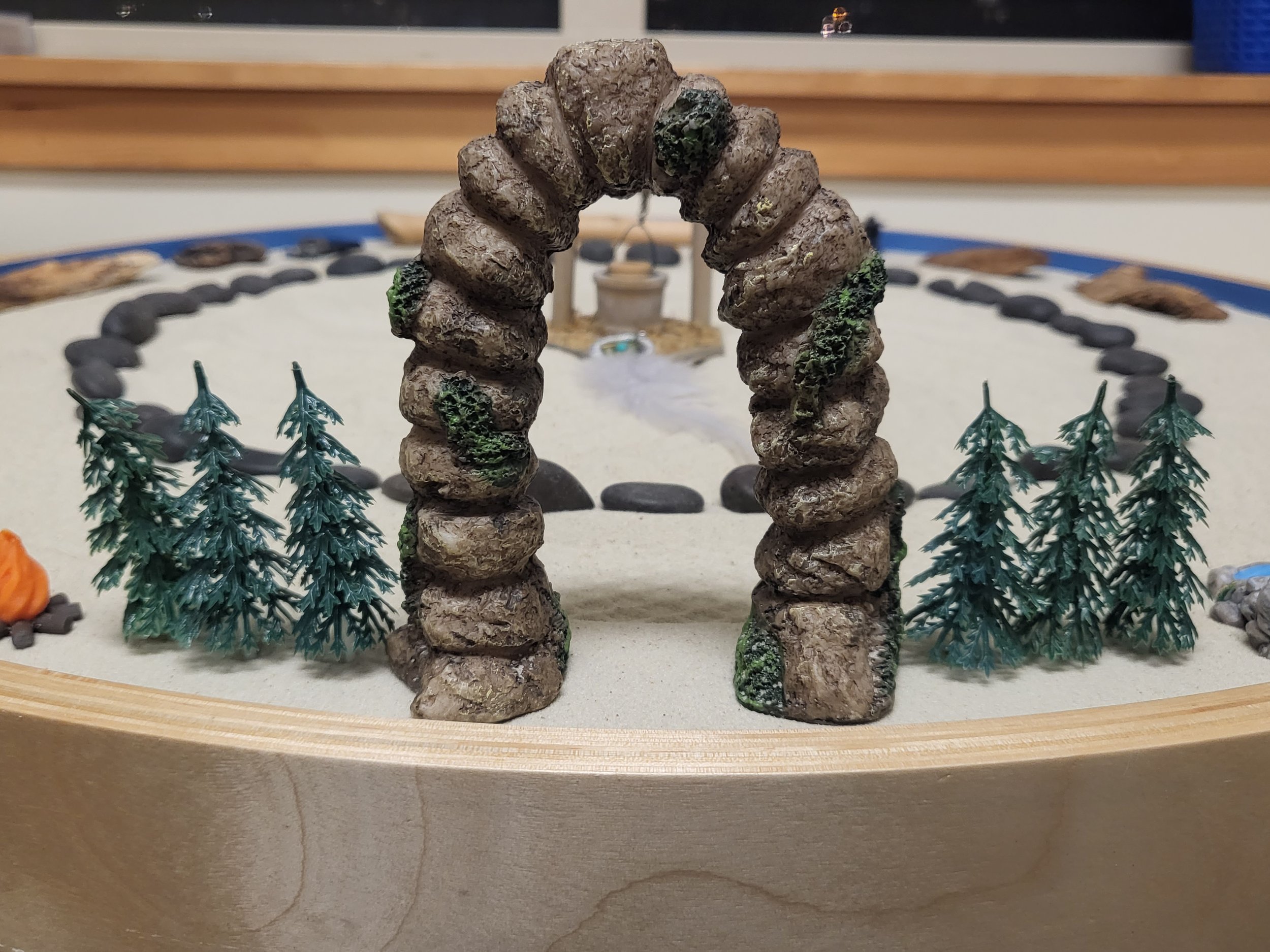
Sandtray therapy is a powerful form of play therapy that allows one to express themselves with or without words. Using Sand in therapy, clients build miniature worlds & create scenes around topics of any desired focus. This process supports emotional integration and cognitive processing, often leading to deeper understanding of oneself and increased sense of safety.
What is Family Play Therapy?
Family play therapy—often called filial therapy or Child-Parent Relational Therapy (CPRT)—is an approach that actively involves caregivers in the therapeutic process. Rather than the child meeting individually with a therapist long-term, parents are supported in learning core play therapy skills they can use directly with their child at home.
Through guided coaching, modeling, and practice, parents learn how to follow their child’s lead in play, respond with empathy, and set supportive limits. This process helps strengthen the parent-child relationship, build emotional understanding, and create meaningful moments of connection outside of sessions.
I typically use this approach with families who have younger children (generally under age 7), as it can be especially effective in supporting early development and empowering caregivers during these foundational years.
Located in Fremont’s “Saturn Building” 3417 Evanston Ave N. Seattle, WA 98115